
Food is a metaphor… Part II

June 21st, 2010

In the last blog, I talked about how food often represents something besides just food.  We’re not always aware of this.  For example, people may say “I love food.”  But is it really food that they love or that food represents someone in their lives who was loving and may have cooked that particular food.  For me, my grandmother represented love in my life as a child.  She just happened to be a “home economics” major in college and an excellent cook.  Certain foods evoke a memory of my grandmother and when I am faced with these foods, I feel like I’m 7 years old, sitting at the formica table in my grandma’s kitchen.  I can see her standing at the stove with an apron on, her hair tied up in a knot.  I can imaging the softness of her hand as she hands me the strawberry shortcake.  And I feel at home and loved.  All that from a piece of strawberry shortcake. Read the rest of this entry »

Food is a metaphor….Part I

June 14th, 2010

If you have used food to medicate your feelings or if your extra weight helps you feel safe, then

you are using food as a metaphor. A metaphor describes one thing as if it were something else.

Saying that “food is love” is an example of how we use food as a metaphor. You may think that

you love food when in fact food is actually filling an unmet need in your life – now or in the past -

for love, safety, joy or other basic needs. Read the rest of this entry »

What does spirituality have to do with eating disorders?

June 7th, 2010

I used to believe that we must choose between science and reason on one hand, and spirituality on the other, in how we lead our lives.  Now I consider this a false choice.  We can recover the sense of sacredness, not just in science, but in perhaps every area of life.

Larry Dossey, MD

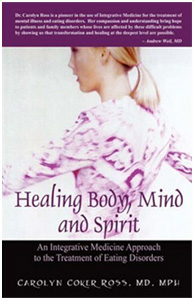
The quote above was written by Dr. Dossey who is a pioneer in alternative medicine.  When it comes to eating disorders, it has long been my belief, which I wrote about in “Healing Body, Mind and Spirit” that eating disorders and addictions are about spiritual pain.  When a person with an eating disorder goes through treatment, the deepest level of recovery is found on the spiritual level.  It doesn’t have to be with religion or even spirituality.  It’s about that sense of sacredness.  Food and eating become sacred.  The body is no long the enemy; a new reverence is developed towards the inner workings of the body.  Relationships as well can become sacred.

Once behaviors are no longer the focus and you become more aware of your emotions and how to manage them, then the real work takes place.  The first step of that deeper work is reconnecting mind and body and learning to nurture and appreciate all the body does for us on a moment by moment basis – digesting whatever we put into it; sending nutrients in our cells to all parts of the body; continuing to breathe.

Becoming more connected with the body is the beginning of becoming more connected with nature, people in our lives and the environment we live in.

Spirituality has many different meanings.  A sense of awe is to be cultivated as part of recovery as is a sense of the sacred.  They provide the anchor for sacredness in your recovery.

Taking care of home

June 6th, 2010

The recent crisis in the Gulf brought to mind, as I’m sure it has for many, how we take care of our home.  The earth, our terrestrial home is under siege and it is heartbreaking to watch the damage she is suffering.  We can use this macro lesson in caring for our home to bring to our awareness how important it is to take care of another home – our bodies.  When we abuse the earth or don’t take proper care of the earth – there are consequences – some greater than others.  when we abuse our bodies, the same applies.

Most of us don’t think of our bodies as our home but in fact they are.  We get one body at birth. We live in that body-home until we die.  The food we eat, whether or not we are active, how we nourish our bodies in general will have consequences.  If we smoke, we damage our hearts and lungs.  When we eat foods that are highly processed, we send out inflammatory cells to all parts of the body which over time cause wear and tear on the body organs.

As we look at the disaster being played out on our TVs in the news, I wonder what headline news it would take to get all of us to take our body health as seriously.  While the media is churning out more and more studies about how “bad” obesity is, we forget that scare tactics never work.  We must all refocus what has been called the war on obesity into a partnership to put health first, then weight. If we saw ourselves in the same light that we see the poor creatures of the sea; if our hearts would open to our own need for caring, then perhaps changing how we treat ourselves, our bodies would make sense. Because, to me, it doesn’t make the most sense that we try to get everyone to “just be thin.”  There are many thin people who are unhealthy.  So thin is definitely NOT the answer.

But anyone who takes care of themselves, who views their bodies as their friend, not adversary, who is a good steward of this home will be as healthy as humanly possible.  Perhaps BP’s oil spill and the crisis in the gulf can serve as a wake up call for us all to take care of all the homes under our guardianship – from our bodies to the earth itself.

Can what you eat protect you from depression?

May 29th, 2010

A study published in the British Journal of Psychiatry (Nov, 2009) studied middle aged people and their diets.  Their conclusion was:  ”In middle-aged participants, a processed food dietary pattern is a risk factor for depression 5 years later, whereas a whole food pattern is protective.”

Many of the chronic diseases that plague us are now being associated with underlying inflammation in the body.  What is inflammation caused by?  The typical Western diet which is high in processed foods, fat and sugar.

The message is:  Change your diet, change your mood.

Focus on eating more fruits and vegetables, less animal protein and more vegetarian protein (beans, lentils, soy), more fish and you can count on feeling happier!!

For more information on the anti-inflammatory diet – check out the anti-inflammatory diet pyramid at www.drweil.com


Getting really serious about healthy eating

April 13th, 2010

I don’t usually share much about my personal eating plan.  Just like many of you, after menopause,  I struggled with my own weight.  Of more concern t me was my elevated cholesterol and family history of heart disease. On top of that were many stressors in my life including being a single parent, the loss of a loved one and a job loss that created financial challenges.  Sound familiar?

In practicing what I preach, I continued to eat healthy to the best of my ability and focused on becoming even more consistent with exercise.  I was up to doing 2 hours of strenuous Pilates and one hour of weight training and had just begun to add an additional 2 hours of walking per week.  I felt like I was on top of the world.  Finally, getting to exercise enough to feel as if I was really getting FIT when I developed over a period of a couple of months right knee pain.  To make a long story short, I found out I have a torn meniscus and have to have knee surgery.  Of course, this meant no walking (without crutches) and even no PIlates.  I continued doing upper body weight lifting until I had a hard time making it to the gym.

So, I know what it’s like to feel as if you’ve worked really hard only to have something put a stop to your progress.  On the good side, I found that my healthy eating and exercise had lowered my cholesterol by 90 points!  My good cholesterol (HDL) is the best it’s ever been thanks to my exercise program and healthy eating.  But, the overall numbers are still higher than normal.  So, more work to be done.

I asked myself – as I sat on the couch with my knee packed in ice – how I could turn these lemons into lemonade.  After a bit of self-pity, I decided to get even more serious about healthy eating and challenged myself to really get serious about the anti-inflammatory diet (www.drweil.com).  I had been working my way up the pyramid for this way of eating little by little.  Now, I decided was my chance to do it all the way. I have begun eating a more vegetarian-like diet.  I am eating more fish and eating chicken or other meat only twice a week.  I am actually learning to cook real whole grains such as barley and millet and couscous.  I’m no longer eating “fake” whole grains or other processed foods.  I’m eating 4-5 servings of vegetables per day and eating more beans, lentils, other legumes daily.  I’ve been trying new recipes that have helped me shift my diet from meat protein based to non-animal proteins.

I’ve also learned a lot about myself in the process.  For example, I learned that I was still snacking more than I needed to when I was stressed or anxious.  (I didn’t realize how anxious I sometimes get!!)  so, I had to reach for resources other than food to deal with these moments.  And unfortunately, I couldn’t use exercise as a coping tool. 

My new program has resulted in really effortless weight loss.  I am waiting to find out if my cholesterol is lower.  I am less hungry than I thought I’d be.  I’m very excited about the new way I’m learning to cook.  I found I even like eating vegetables for breakfast.  Starting the day with a savory meal instead of a sweet one makes me less likely to crave sweets later in the day.

I never feel deprived.  On my recent birthday, I had 2 desserts in one weekend without guilt and without any negative consequences; nor did I crave or feel the need to eat sweets after that weekend. 

I’m excited to see where this is leading me.  I know I couldn’thave gotten here without the years of healthy eating I’ve been doing…it would have been too great a leap for me.  But given my success in eating a basic healthy diet, I’m thrilled now to take this next step that may allow me to reduce my heart disease risk without medication. 

I’ll keep you posted. Happy eating to you all.  Remember enjoying food is the most important of all healthy eating behaviors.

How can mother’s help daughters with body image?

March 22nd, 2010

As a physician specializing in eating disorders, I see many young women who first learned to dislike their bodies or learned to diet from women in their families, including their mothers.  When I speak with mothers about this, I usually advise a number of things:

1.            Recognize that your daughters learn from watching what you do, not what you say.  If you express body dissatisfaction (“aren’t my thighs huge” or “I wish I was skinny like you”) in front of your children (because boys can develop disordered eating as well) or if they see you dieting or not eating, the message they get will be that dieting is what women should do and that it’s normal to hate your body.

2.            Some parents in an attempt to focus on healthy eating can go overboard.  Examples of this include forbidding children to eat certain types of foods or telling them that if they eat (candy or pasta or whatever their “fear” food is) they will get fat.  The best way to teach good nutrition is of course modeling it by eating healthy without modeling restrictive eating.  So, most nutritionists suggest that we all eat a wide variety of foods and that we not tell kids that foods are either “good” or “bad.”  To teach your child about nutrition, learn facts about nutrition and teach them rather than labeling food as good or bad.  For example, carrots are a good source of vitamin A which helps with your vision.

3.            Many parents are very concerned about childhood obesity and messages about how to prevent and treat this are very confusing.  There are some important things parents can do to help with this.  Firstly, recognize that your children have your DNA.  Therefore, if you have obesity in the family, it’s possible (but not inevitable) your child may struggle with their weight.  So, start them out early by being active AS A FAMILY, rather than putting the focus on your child and trying to make them exercise.  Also, eating meals together as a family is one of the most important activities you can do to prevent disordered eating and obesity.

4.            Don’t put all your focus on your child’s appearance.  Help build up their self-esteem by acknowledging them for other qualities they have or other things they excel in.  Comment on their school performance or their musical prowess.  Never compare one of your children with another one, especially regarding their appearance.  If you are worried that one of your daughters weighs more than another, you have to take into account that though they may be in the same family, they have different genetic makeups.  As well, children’s bodies are constantly changing and growing.  Many children look heavy before puberty and then they get taller and are thin.  You cannot judge a child as being too heavy unless they are significantly obese.

Above all else, it’s best to make sure your child knows that you care about them as a person, not just about their weight or appearance.

Historic day for those suffering with Binge Eating Disorder

February 10th, 2010

Why is this so important?  The National Institutes of Mental Health estimates that 3.5% of women and 2% of men have BED.  Binge eating disorder is more prevalent than anorexia or bulimia.  Sixty percent of those with BED are female and forty percent are male, which is the largest category of eating disorders that affects men.  Unlike bulimia, those with BED do not have compensatory mechanisms to offset their binging. They do not purge through self-induced vomiting, the use of laxatives, diuretics or through compulsive exercise.  BED sufferers share the common co-occurrence of depression, anxiety, bipolar disorder and substance use disorders with bulimia sufferers.  Those with BED are usually overweight or obese but not always.

Eleanor is a typical patient I see in my office.  She is 35 years old, works at a large company, is unmarried and has been suffering with BED for the past 6 years.  She hides her eating because of being embarrassed by how much she eats.  However, she has endured “funny looks” by coworkers during work parties in which she goes back to the buffet over and over.  She has dieted to try to lose weight but always regains it when her binges begin again.  She is embarrassed and ashamed of her behavior but feels unable to control her binging.  Her BED contributed to her recent divorce and has made it difficult for her to have close friends.  She has been so distraught about her binging that she recently began drinking, which finally led to her seeking help.

Currently, because BED has not had its own diagnostic criteria, most people with BED have not received adequate treatment for their problems.  Approximately 1/3 of those going to commercial weight loss centers, for example actually have BED.  Weight loss programs are not equipped to handle the emotional aspects of BED.  Only about half of those with BED actually have received help with the emotional distress, shame and guilt associated with their disorder.

As well, individuals suffering with BED may not have felt as if their problem was being taken as seriously as anorexia or bulimia.  In fact, BED may be more chronic than anorexia (up to 8 years on average).

This historic news may also mean more research dollars can be devoted to the study of BED and hopefully this will lead to more effective treatment and better reimbursement from insurance companies for therapy.

Are you ready?

January 26th, 2010

In my consultations with individuals who are trying to lose weight, I often ask them, “why now?”  Many people are motivated to lose weight because of health problems that are affecting their quality of life.  One of the more common reasons is that they don’t like the way they look.  They’re not happy with their bodies.  But there are some who feel “I should lose weight” and have a more difficult time really digging deep enough to find clear motivating factors that are strong enough to keep them going through the long journey to a healthy weight.

Why is this important?  Many of you have been on diets before.  You may have even lost weight.  Then something happened.  Maybe you changed jobs or you went through a breakup of a relationship.  In other words, LIFE HAPPENED.  If we live in our fantasies, we can pretend that life won’t happen again.  But it will!  So over my 20+ years in medicine, I’ve tried to help people not just with weight issues but with other eating disorders, serious medical problems, etc. learn to change their behaviors.  What has made most of them successful is having motivating factors that anchor them to the process of staying on track, doing whatever is needed until they reach AND THEN MAINTAIN their goal.

What can you do?

Make a list of 20 reasons why you want to make a behavior change – whether it be eating more healthily, losing weight, lowering blood pressure, etc.

From that list, take your top 5 reasons.

Next write under each of these top 5 reasons how LIFE might interfere.  For example, if your goal is to be more physically fit, life could interfere in the following ways:  if you live where it snows, maybe you won’t be able to go outside to exercise.  THEN WHAT?  Or, what do you do if your boss needs you to work late on a project?  THEN WHAT?  Or maybe your child gets sick.  THEN WHAT?  Or you get bored working out on the treadmill.  THEN WHAT?

Next, for each THEN WHAT, write down your back up plan.  If you find it hard to do this, make sure you are really motivated to accomplish this goal.  If you feel you are motivated but just lack skills, ask yourself WHO can help you get skills.  For example, for the THEN WHAT of you get bored with your exercise – you could take a dance class, try yoga, etc.  If you have trouble coming up with other ways to make exercise fun and sustainable, work with a personal trainer and see if they can help you do this.

When you’ve answered all of the above questions and you have backup plans for all your THEN WHATs, you are ready.

Take the time to do this for yourself so that when you put in the time to lose weight, you will accomplish your goal and it will be maintained.

Just say NO to diet resolutions. Make New Year’s goals come true!!

December 26th, 2009

Every year at this time, many people choose to make resolutions to lose weight, go on a diet, start an exercise program, get in better shape, etc.  Most of these resolutions fail.  Perhaps you’re one of these individuals who have good intentions and who literally buy into the diet industries promises that if you just buy this or that new product, you will finally lose weight.

Just a reminder….The diet industry which is a multi-billion dollar industry has one purpose and one purpose only – to make money.  If making their purpose accidentally helps you lose weight, then that’s great.  Usually that’s not the case however.

This year, make a resolution to do what works. Here’s what we all know about losing weight:

  1. you have to change your behaviors to lose weight
    1. eat more healthily
    2. exercise regularly
  2. changing behaviors takes time and energy and effort.  Are you ready to commit time, energy and effort?
  3. You may have tried similar methods to lose weight in the past.  As yourself did it work then?  If not, why not try doing what works?
  4. You have to eat regularly to lose weight.  That means no skipping meals to try and make up for overeating. That means eating 3 meals + 1 snack everyday even if you overate the night before.  Your body needs to know it can depend on you to feed it so it doesn’t have to hold on to food in anticipation of not getting fed.
  5. Eating more fruits and vegetables is essential to losing weight.  If you do this, it will help you feel more full and eat less throughout the day.

We all know diets don’t work or work only temporarily.

To make your New Year’s goals come true do what works.  Make a realistic plan to lose weight slowly by doing what works.  Think of losing 10-15% of your body weight over the next 6 months and then seeing if you can keep it off.  Think of finding some form of reasonable and sustainable exercise you would actually enjoy doing instead of forcing yourself to do an exercise routine you hate just so you can “beat your body into shape.”

Making small steps that you are consistent with will help you stick with your program.  Don’t keep fooling yourself into thinking there is a magic pill that will take the weight off while you continue to eat anything and everything you want.

New Year’s Day is approaching.  Are you ready to take on the challenge of getting healthy by doing what works?!

Posting Calories in NYC – Help or Not?

November 14th, 2009

A recent article in the Opinion section of the  New York TImes discussed the results from multiple studies about whether the mandatory posting of calories which is in effect in NYC has helped people to make better choices.

Knowing more doesn’t always change behavior in the absence of motivation / commitment.

See article:

http://www.nytimes.com/2009/11/13/opinion/13lowenstein.html

The family dinner table

October 28th, 2009

What were your experiences growing up around meal times?  A new study published in Science Direct by Annette S. Kluck from Texas Tech University found that family dysfunction and negative family food-related experiences increased risk for disordered eating.

Other studies have reported similar findings.  Individuals who were humiliated, neglected or abused or who were teased at meal times were more likely to have disordered eating.  As well, those who didn’t have at least one family meal together may be at higher risk.

Perhaps you grew up in a family where these types of things occurred.  You may have continued to feel stress or distress around meal times.  What can you do?

1. Separate your life from your meals.  That means, don’t rush from your busy, stressful job to shove food down at a restaurant or fast food joint.  Take at least 5 minutes no matter where you are to center yourself, take a few deep breaths, read something inspirational or do whatever it takes to leave the stress behind and begin your meal with calm.

2. Establish your own rituals around meals.  Try different things – use candles to set a different, more relaxed mood; play calming music; set the table with fine china.  Or simply, start your meal with a prayer or other reflective practice.

3. Honor mealtimes as a time to nurture your body, mind and spirit.  So, don’t eat standing up at the kitchen counter or eat while on the run between appointments.  Even if you have only 15 minutes to eat, sit down, put a napkin in your lap and eat quietly and calmly.

Patterns from the past are difficult to change, especially those around food.  The first step to change is to become aware of what you were taught about food / mealtimes by your family and how you want mealtimes to be now, as an adult.  Perhaps as a parent, you may want to involve your family in coming up with ideas about how they’d like their food experience to change.

Eating, along with sleeping in the US are the two most neglected but necessary functions.  We often don’t expect to put these into the schedule unless we have nothing else to do.  This results in poor nutrition and an epidemic of fatigue.  Stop, eat, smell the roses and get to bed on time and I can promise your life will dramatically change for the better!

Alternative Medicine is Mainstream

October 15th, 2009

Below is a link to a very interesting article that talks about how our genetic makeup is not fixed in stone and that alternative therapies have the ability to change our risks for health issues.  This was published in Wall Street Journal.

http://online.wsj.com/article/SB123146318996466585.html#printMode

Scarcity and abundance

October 11th, 2009

I’ve been reading lately about the energy of money and how we live in either scarcity or feelings of abundance.  I don’t think this energy phenomenon applies only to money.  I think of my own life which is very busy (full of things to do) and may be scarce in some of the things I used to love to do – sailing, skiing, going to plays, etc.  So while money may be scarce, it’s not the only thing.  Fun can be scarce too.  I wonder how much of us live in one of these states and while focusing on one way in which it manifests, may miss the many other ways it shows up in life. Read the rest of this entry »

Alcoholism and Women

September 15th, 2009

Alcoholism is not an uncommon co-occuring disorder in those with eating disorders including binge eating disorder and compulsive overeating.  About one-third of women with an eating disorder will also have alcohol problems.  Up to 25% of those with anorexia nervosa and over half of those with bulimia will also have a substance use disorder, many of them alcoholics. Read the rest of this entry »


“Dr. Carolyn Ross is a pioneer in the use of Integrative medicine for the treatment of mental health issues and eating disorders. Her compassion and understanding bring hope to patients and family members whose lives are affected by these difficult problems by showing us that transformation and healing at the deepest level are possible.”

– Andrew Weil, MD

verified by Psychology Today

Tell a Friend

  • Home
  • Natural Remedies for Addictions
  • About Dr. Ross
  • Store
  • Professional Services
  • Media Room
  • Blog
  • Contact Us
  • Resources

  • Copyright © 2008 Dr. Carolyn Ross. All Rights Reserved. Site Design by monkeyCmedia

    Carolyn Ross is proudly powered by WordPress
    Entries (RSS) and Comments (RSS).